Garment and textile RFID for end-to-end laundry tracking and management. A waterproof RFID tag on every item — silicone and heat-resistant — survives industrial laundering and turns your linen and uniforms into trackable assets.
Towels, bed linen, robes and uniforms move between floors, the laundry and customers with no audit trail. What goes out never matches what comes back — and the shrinkage disappears into operating costs.
Misplacement, mix-ups and premature disposal consume a large share of the textile stock every year — with no one knowing exactly where it went.
Counting item by item is time-consuming, prone to human error and never reflects the real stock in circulation at any given moment.
It is impossible to know how many wash cycles each item has been through, where it is, who holds it or which customer or contract it belongs to.
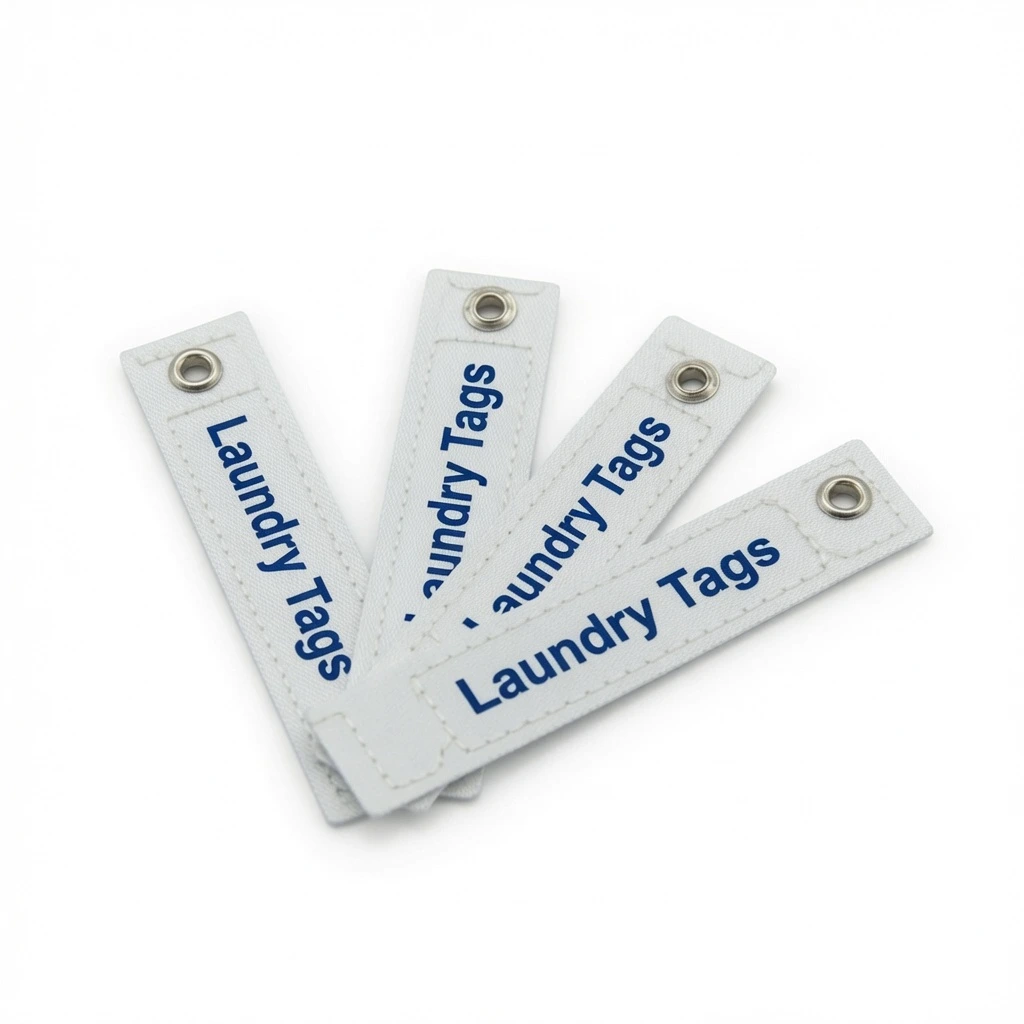
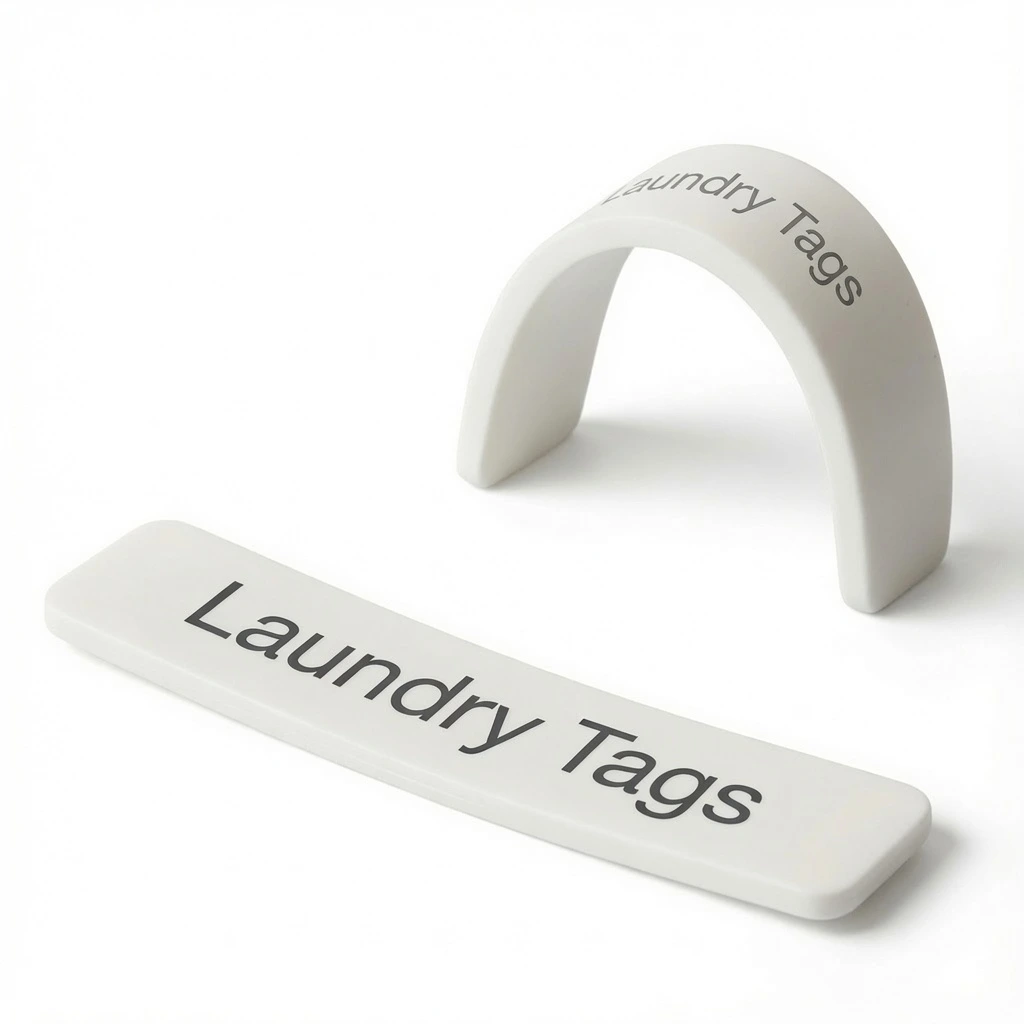
Each garment carries a small silicone RFID tag with a UHF chip — sewn in, heat-sealed or inserted into an internal pocket. This is textile RFID built for the wash: discreet and flexible, the RFID tag stays with the garment throughout its entire service life.
The RFID laundry management system runs in the background. Your laundry operation continues exactly as it does today — counting and tracking simply become automatic.
Each item receives an RFID silicone tag, linked to its type, customer, contract and date of entry.
The textile follows its usual cycle of use and industrial laundering. The tag withstands every cycle.
RFID portals and handheld readers capture hundreds of items at once, on entry and on exit.
Inventory, location, wash cycles and item-level traceability, always up to date.
The same garment and textile RFID serves hospitality, healthcare, uniform rental and industrial laundries — each with its own laundry tracking gains.
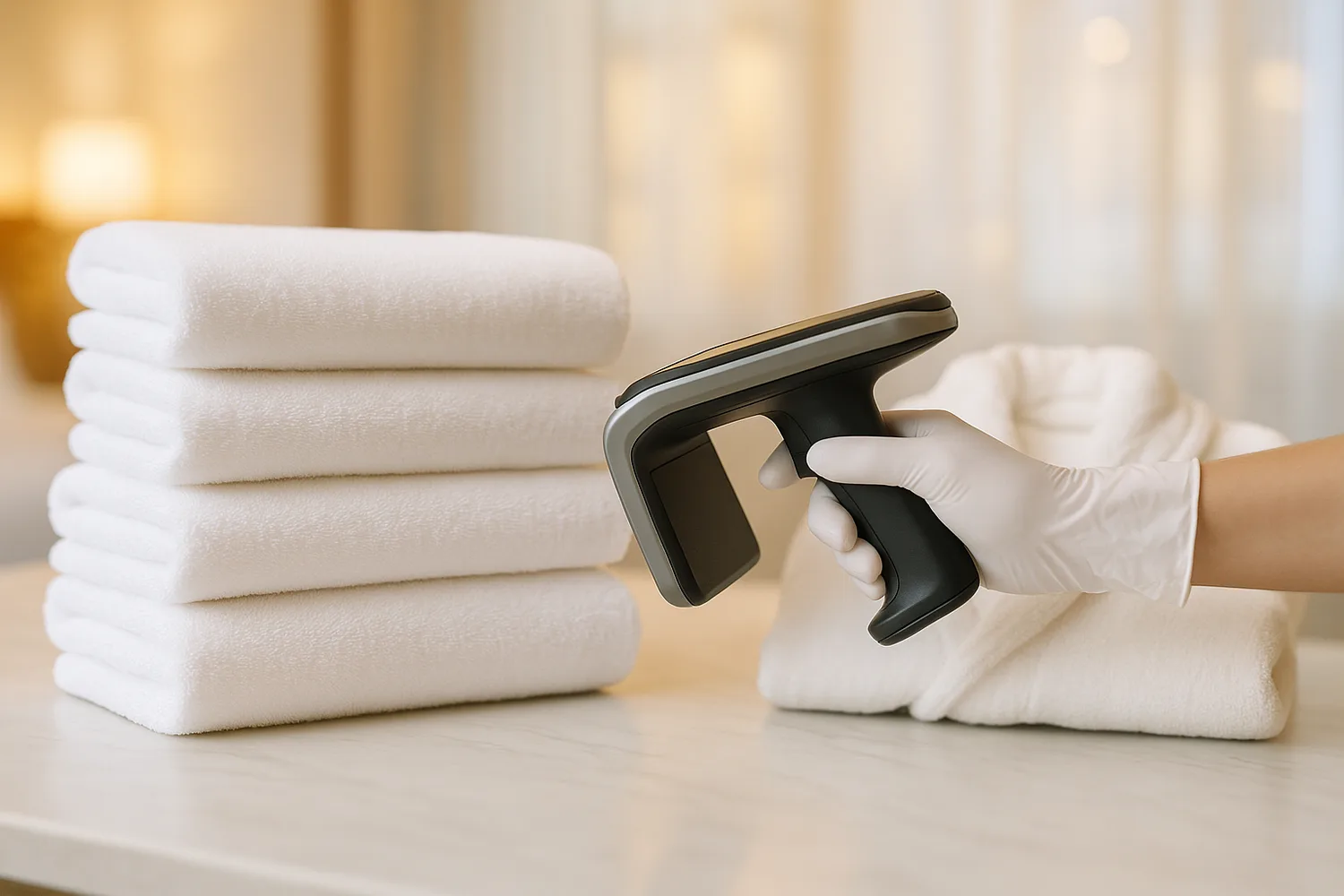
End linen loss between floors, guests and the laundry. Stock by category always reconciled.
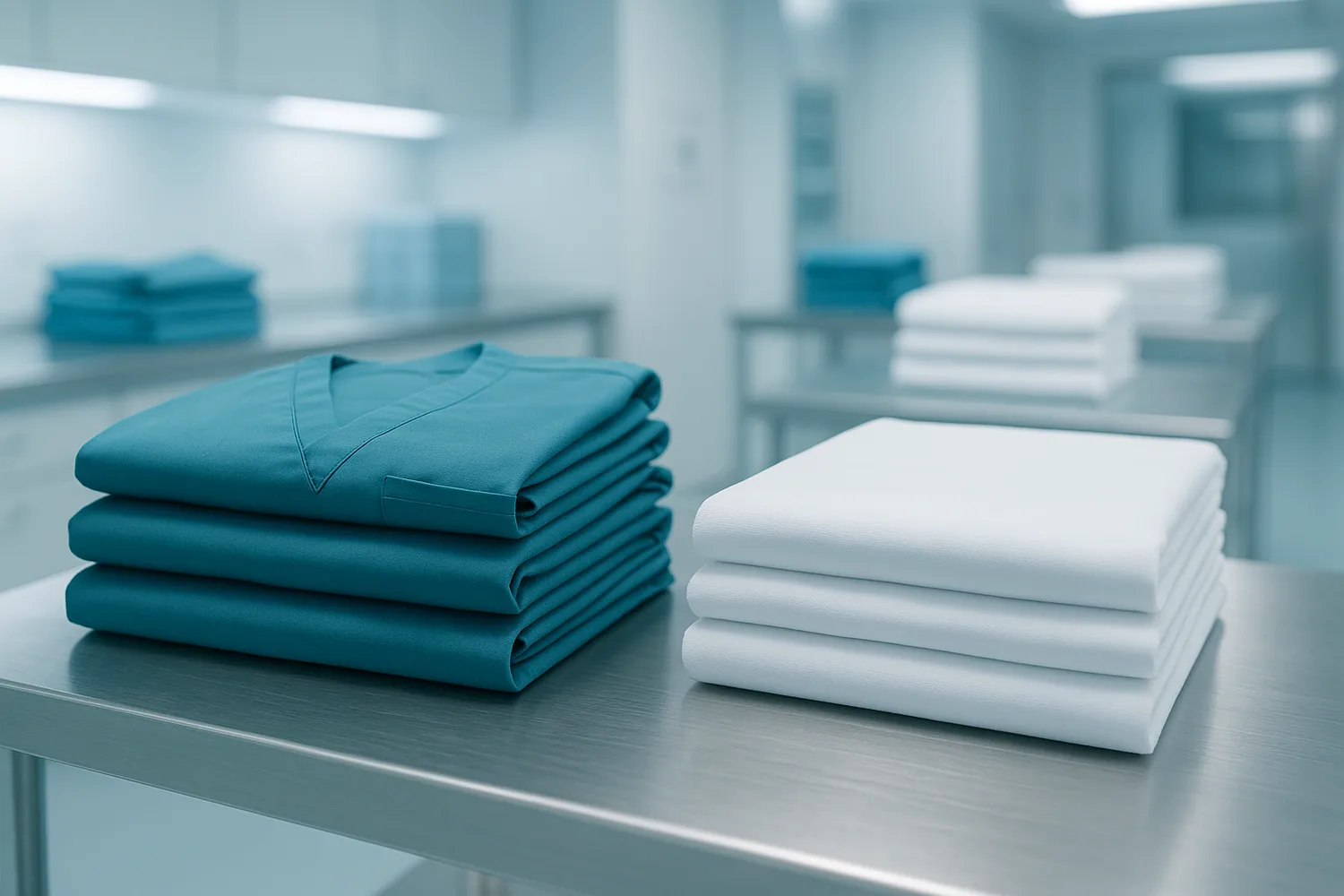
Control of wash and hygiene cycles, with traceability of scrubs and hospital linen by department.
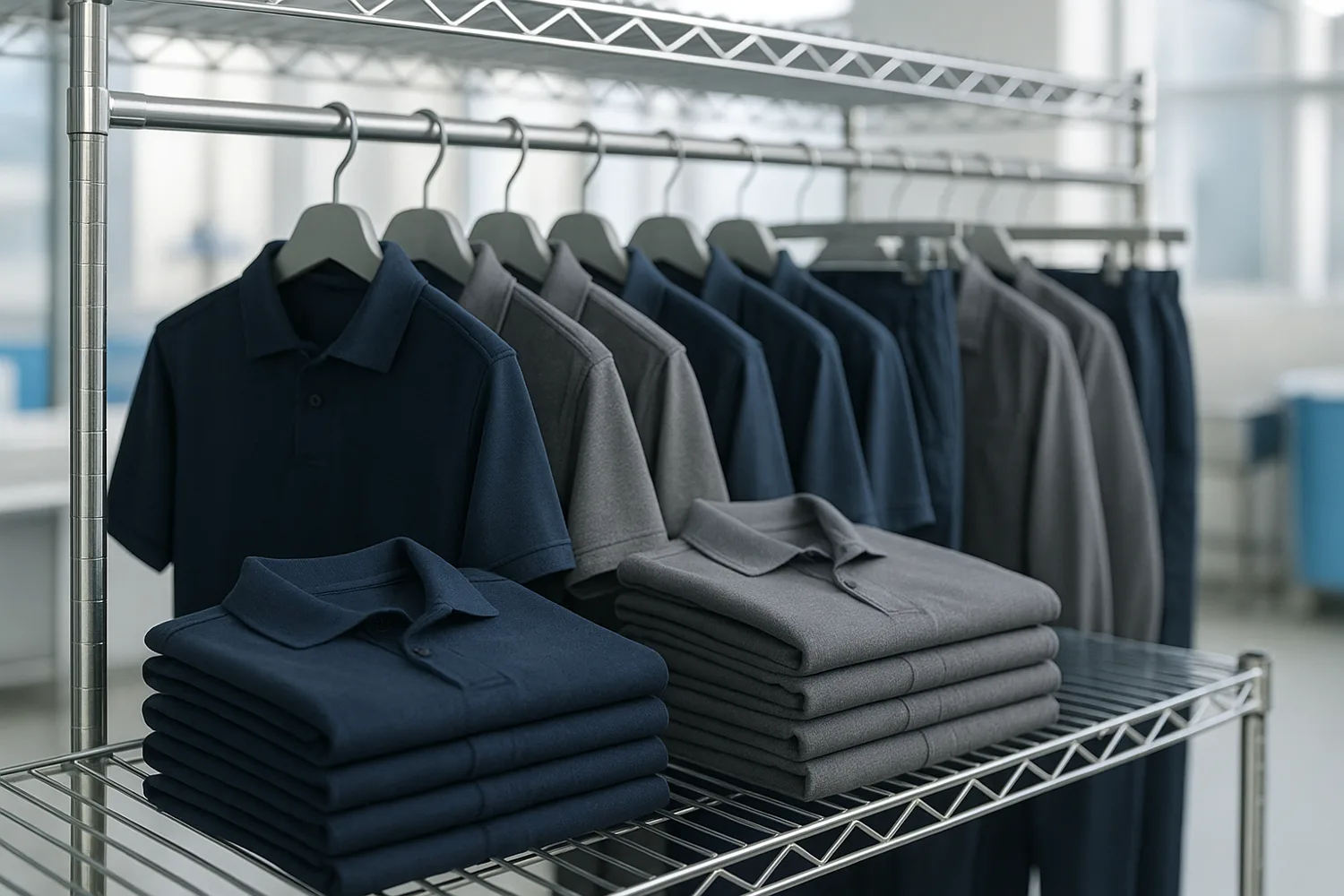
Item ↔ employee assignment, wash-cycle counting and contract-based return control.
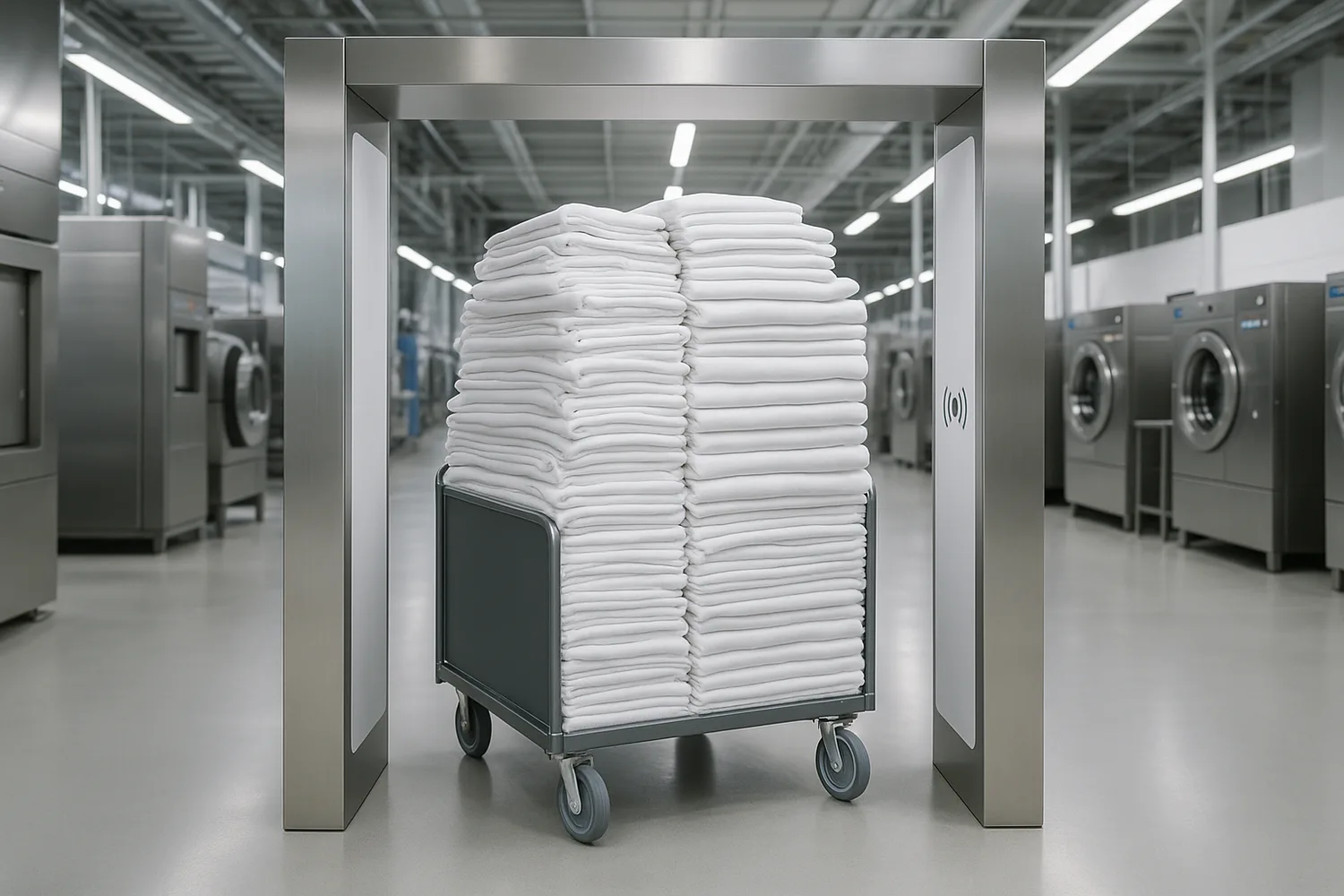
Automatic sorting, batch reconciliation and per-item, per-customer billing with no counting errors.
Typical parameters for UHF RFID silicone laundry tags. The exact model is defined during the assessment, based on the textile, the volume and the reading environment.
| Characteristic | Specification |
|---|---|
| Frequency | UHF 860–960 MHz |
| Protocol | EPC Class 1 Gen 2 / ISO 18000-6C |
| Chip | NXP UCODE 8 (or Impinj Monza R6) |
| Material | Waterproof silicone |
| Operating temperature | –40 °C to +200 °C |
| Wash resistance | 200+ industrial wash cycles |
| Ingress protection | IP68 |
| Chemical resistance | Detergents, chlorine/bleach, perchloroethylene |
| Read range | Up to 4–6 m (depending on antenna and environment) |
| Dimensions | ~50 × 15 × 3 mm (models from 25–95 mm) |
| Attachment | Sewn in / heat-sealed / internal pocket |
| Service life | 3 to 5 years |
* Representative values for the market standard of UHF silicone laundry tags. Final specifications, chip model and read range are confirmed in the technical assessment of each project.
Less loss, less counting time and reliable data to drive purchasing decisions, billing and audits.
Every item is a tracked asset. Anything missing is identified on the spot, not at month-end close.
Bulk reading counts the entire stock without opening bundles or stopping the operation.
Wash-cycle tracking lets you replace each item at the right time, avoiding premature disposal.
A complete trail for every item — entry, use, washes and write-off — ready for audit.
Laundries bill exactly what they processed, by customer, with automatic reconciliation.
Dashboards for stock, losses and cycles always up to date, accessible from anywhere.
Garment and linen RFID is part of CPCON's broader RFID asset tracking practice. We deliver inventory and RFID projects end to end — from field tagging to the platform and integration with your systems. More than 4,500 projects and 880 clients across the Americas, Europe and the Middle East trust this method, with on-the-ground delivery in the UAE.
We show the silicone tag surviving the wash and the platform running on a sample of your own linen. Within a few days you see the real stock in circulation.